

deciding to lose
concealment, conflict, consequences

When I first came to you in Poland, you saw with your own eyes that all my deeds were in the open, even though you said that you had orders to undertake your journey in secret. But I said, on the contrary: Let the whole world clearly know and see. If it is an evil thing we do, let it be annihilated at once; if ours is a good faith, who is there in this estate to stop it?
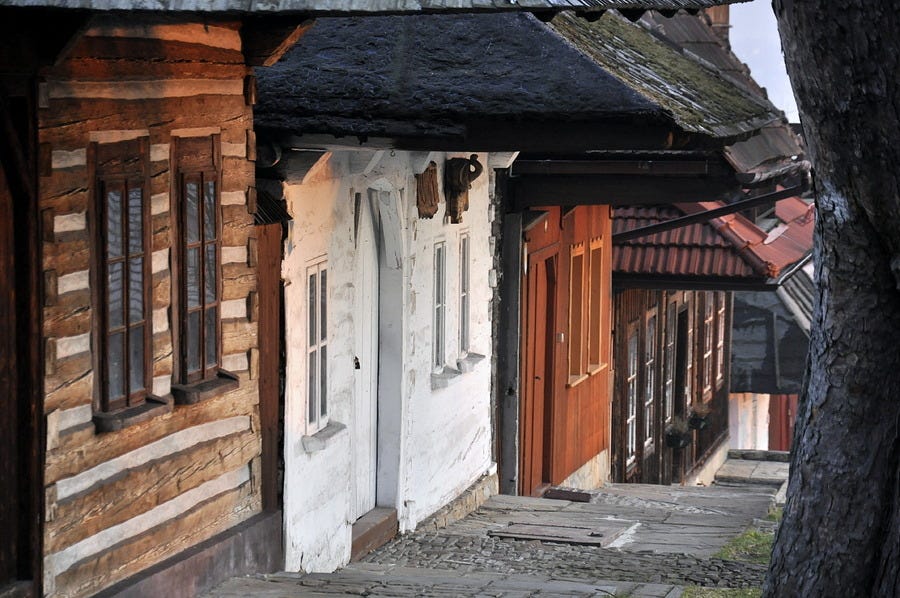
But when I came to Lanckorona, and I saw that you were singing prayers at night with the windows closed, I went out and opened the window so that all could hear….
When my time comes, everyone must see, and the whole world will watch; even those who are far away will hear. But you who did everything secretly: what came of it?
—Jacob Frank, Words of the Lord, §1311
I’ve discussed Eva Frank a few times on my blog, but never at any length Her more famous father Jacob Frank, who served as the trailblazer for Her messianic career. As I’ve been thinking on my long-in-progress post/piece (?) about anti-Frankist antisemitism, the Lady Eva has been more relevant (which has been part of the issue with past accounts of the situation; more on this later!). She’s less complicated and less weird than Her father. She’s perhaps the least complicated person, whereas Jacob, despite being a trickster genius and a giant of Torah, gives me—yes, even me—something of the ick. He leaned into that, to be fair. But I do find some of his actions admirable, and one decision of his I find inspirational above all, if difficult to reflect on: the moment he chose to lose.
For background on the above passage, Jacob was one inheritor of the then long-running but controversial Sabbatean movement, which had been causing schisms within Judaism for almost a century since its origin in the mid-1600s. A couple of different leaders had split apart the remaining Sabbateans after the false conversion, then death, of its movement’s founding messiah figure. Shabtai Tzvi, this founding father, Jacob refers to as the First; his most famous successor until Jacob Frank’s time, Berakhiah Russo aka Osman Baba or Señor Santo, he refers to as the Second. But Señor Santo’s fame was swiftly eclipsed. Jacob is the best-remembered of these later leaders, in part because of how radical he was (Frankism quickly became obvious as something far removed from Sabbateanism); in part because his and especially his Daughter’s leadership would have immense trickle-down effects on the nascent non-messianist liberal Judaism; and in part because of where he ended up making the biggest splash, which is to say, Eastern Europe. The other notorious leaders among the Sabbateans had tended to be down in the eastern Mediterranean, whereas in the West, we tend to recall Ashkenazi history most intensely. The remaining Sabbateans—Dönmehs—in fact still live in Turkey (and very occasionally Israel), having survived as false converts to Islam while losing numbers to actual assimilation into the Muslim population.
This Sabbatean habit or doctrine of secrecy still found among Dönmehs is what Jacob chose to end among his own followers in Poland in 1756. At the beginning of the above passage, he’s referring to the Second’s orders to his followers to bear the “burden of silence.” When people recall Frankism as a secret sect like the Turkish Sabbateans, there’s good reason for that. It eventually slid into a semi-opaque hybrid existence after—from Jacob’s perspective—its temporary failure. But Jacob’s radical choice at the beginning of his movement was to open the window, to let the other Jews hear the Frankists’ singing, and to lose. This bold decision was Frankism’s birth.
Despite the rabbinate having repeatedly excommunicated the Sabbateans from among them, an unsteady peace tended to remain, as long as the Sabbateans kept their shenanigans, such as alleged naked-prophetess-led services, private. Don’t ask, don’t tell, as even contemporary scholars have put it.1 Jacob called for an end to this informal and uneasy arrangement and pretty much immediately lost the ensuing conflict. There’s not much of another way to put it. His sect’s numbers were small, relative to the mainstream Jewish community. We don’t know much about the actual religious service going on when he threw open the window; anti-Frankist/Sabbatean sources allege a perverse sexual ritual, but that’s exactly the sort of thing Jacob would’ve bragged about if it had happened, and he didn’t. What he said above is what he said on the incident, so all we know about for sure is the singing — normal among Sabbateans, who have many hymns of their own, and recounted in this incident both by Jacob and his haters. The orthodox opponents of Frankism also claimed to have beaten up some of the participants in the ritual and looted their houses, so I think anti-Frankists might want to stop citing these heresiological accounts too, for reputational purposes. They give a bad look for their own team, in retrospect.
There were certainly doctrinal reasons for much of what Jacob had his followers do, here and afterward, such as their mass and almost entirely false conversion to Christianity. But there were also practical impetuses behind a lot of what was to come. Suddenly, survival had become a priority; facing enemies among both Christians and fellow Jews, Jacob’s movement sometimes resorted to secrecy, and sometimes made regrettable decisions to stay alive. I won’t go into all those historical details here.
Theological reasoning and later history aside, I find Jacob’s decision to open the window poignant and challenging as a lesson. He had to know that he was going to lose in open conflict — whether or not he was literally beaten up, he was arrested, and some of his chief followers were too, in a situation that spiralled out into further danger and years of pain. It wouldn’t require a prophecy for Jacob to know things would not end favourably for him and his movement in the conflict he was inviting. Elsewhere in the same dictum that I quoted above, he mentions that he didn’t mind being open about the falseness of his Catholic conversion later, either, even though it led to his arrest and a much longer spell in captivity. Clearly he valued keeping the windows open, even when the imminent consequences were obvious and unpleasant.
In throwing open the window, Jacob embraced defeat, not mere conflict. Much of his teaching has to do with his movement having failed, in fact, for various reasons. His teachings make for depressing reading, often written in phrases like “We would have been able to do such and such…” Faith in the counterfactual: knowledge of what may have been fuels hope for what may still be. Of his many dicta, many are recorded hopes, lost hopes, not even hopes deferred. The redemptive future Jacob predicts is a lot darker than the one he initially thought he could bring about. He knew he wouldn’t live to see the happy ending. Yet Jacob says, in the above quote: “If it is an evil thing we do, let it be annihilated at once; if ours is a good faith, who is there in this estate to stop it?” It was not annihilated at once. There was still some Spark left. The loss was never total.
I find myself troubled by the high bar Jacob Frank set in 1756 by throwing open the window to his people’s faith. I often ask myself whether I have windows in my life that I need to throw open and to endure what backlash comes. Because that’s the thing: the moral isn’t that I need to face an uncomfortable but winnable conflict, but that I need to act according to my principles in an honest manner even if I know the result will not be in my favour. I don’t have any concrete examples to give of closed windows I’ve identified in my life—yet—but the fact that the teaching strikes a nerve means there’s something there to unearth, perhaps a window that’s been shut for so long that vines have grown over it, like the door Jacob believed it was our final task to open, but that “has been closed so long it has become overgrown.” (Words of the Lord §723)
I’ll close with a hopeful block quote.
Everything I told you, all this would have happened if you had followed me in wholeness, as I once saw your hearts whole at my arrival in 1756. At that time you followed me. This will surely not be forgotten, and your loyalty in your youth will be rewarded. Now if God will help me to open the door and reveal the hidden Gnosis, at that time, even though you won’t know what to ask, I will write you every day what you have to do. If you pay heed, you will be blessed by me and, being worthy to see Her and to be flooded with love for Her, at that time, through Her, you will be able to come to the love of the hitherto unknown True God.
—Words of the Lord §195
See Pawel Maciejko, The Mixed Multitude, for this history in greater depth, as well as Jay Michaelson, The Heresy of Jacob Frank.