

be more basic!
Live, Laugh, Labubu?

As a teen, young adult, and ancient hag in my late 20s, I have gone to see many movies just because some friends were going. I’ve never regretted it. I was on the fence about seeing Companion earlier this year, for instance, but some friends were going anyway. Even though I didn’t like Companion, the outing was well worth it: my friends and I could talk about it afterward, and I got enough food for thought out of the movie to type up a screed on its politics, months later. To be clear, I’m joking about being an ancient hag, don’t strangle me.
I can stretch my memory farther back. Seeing Chronicle (2012) with a friend as a teen was surprisingly fun. I’ve come to appreciate the movie still more as an adult; it’s an unsung anti-misandrist masterpiece and still entertaining in its way. I first watched Teeth (2007) at a party in 2017 or so, as an undergrad. While that party was mostly memorable for unrelated reasons that I’ve already described elsewhere, Teeth is another movie that I’ve kept thinking about a lot, and it gave the partygoers a common object of interest. That’s not quite the same as seeing a movie at a theatre but you get the point: movie-viewing as a social experience is more enjoyable than the sum of a movie’s parts.
Consumption habits that many people refer to derogatorily as “basic” often share the same joy as going to see a movie with friends, just because friends are going. The communal aspect of the consumption is both its motivation and an enhancement of its pleasures. The consumption then contributes to building community.
Being basic is usually good. And if we do away with the interests of “basic bitches,” as many cynics seem to want, we sacrifice much of society’s remaining glue.
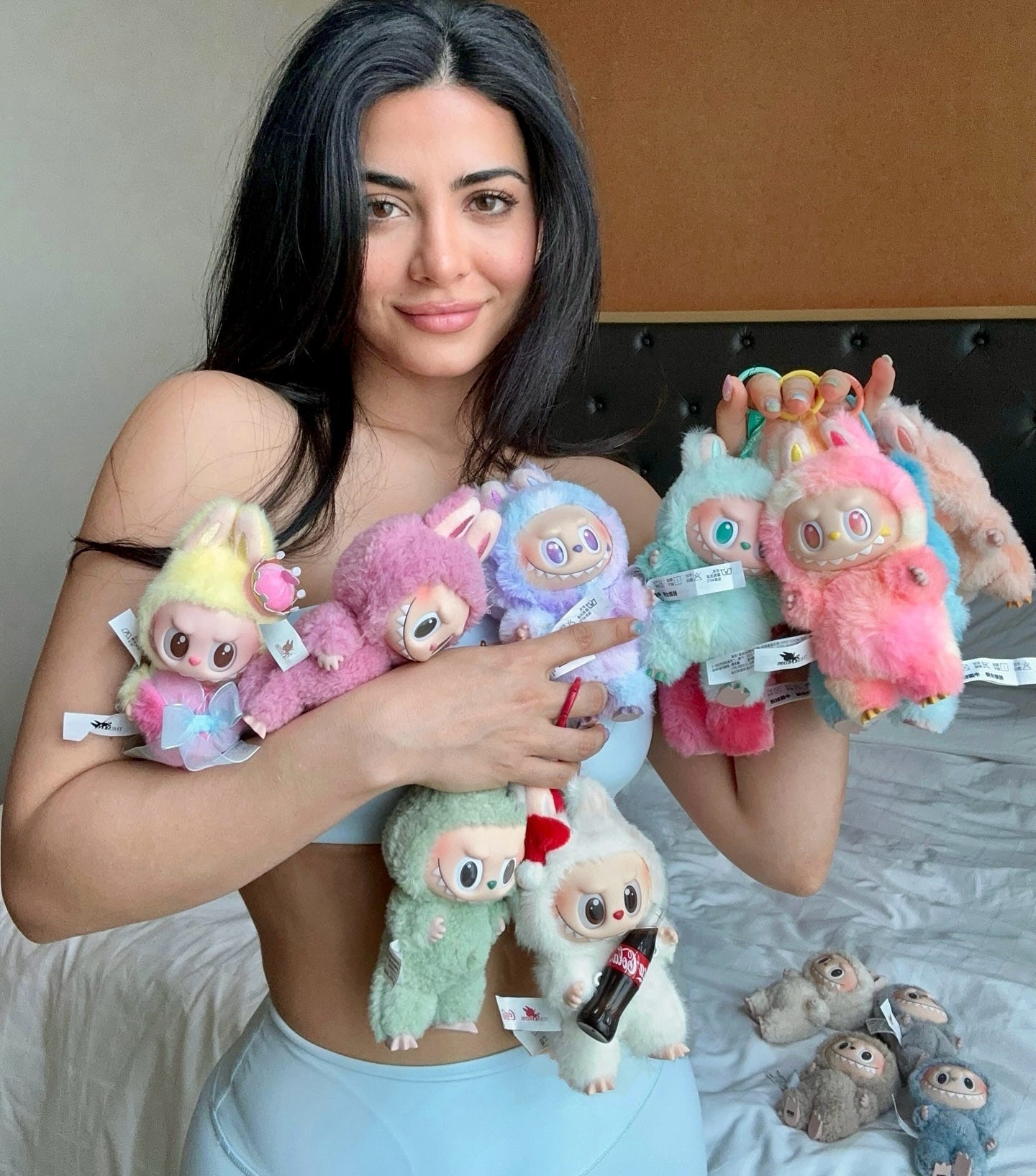
Labubus may be the easiest basic trend to hate, at the moment. I personally find them ugly and don’t get their appeal. Well, I get the appeal of consumption as a social activity, but not Labubus themselves. I like the popstar Lisa, who famously blew up the trend. I like actress Emeraude Toubia, pictured above. But they have not converted me. While no celebrity endorsement is going to make me like Labubus, I don’t think that their lack of appeal for me, personally, means they’re bad.
There are, however, oft shamed trends I personally relate to, or indulge in. I like Stanley’s insulated cups, even if I grew up around their plain green behemoths — nothing akin to their now infamously trendy Quenchers.

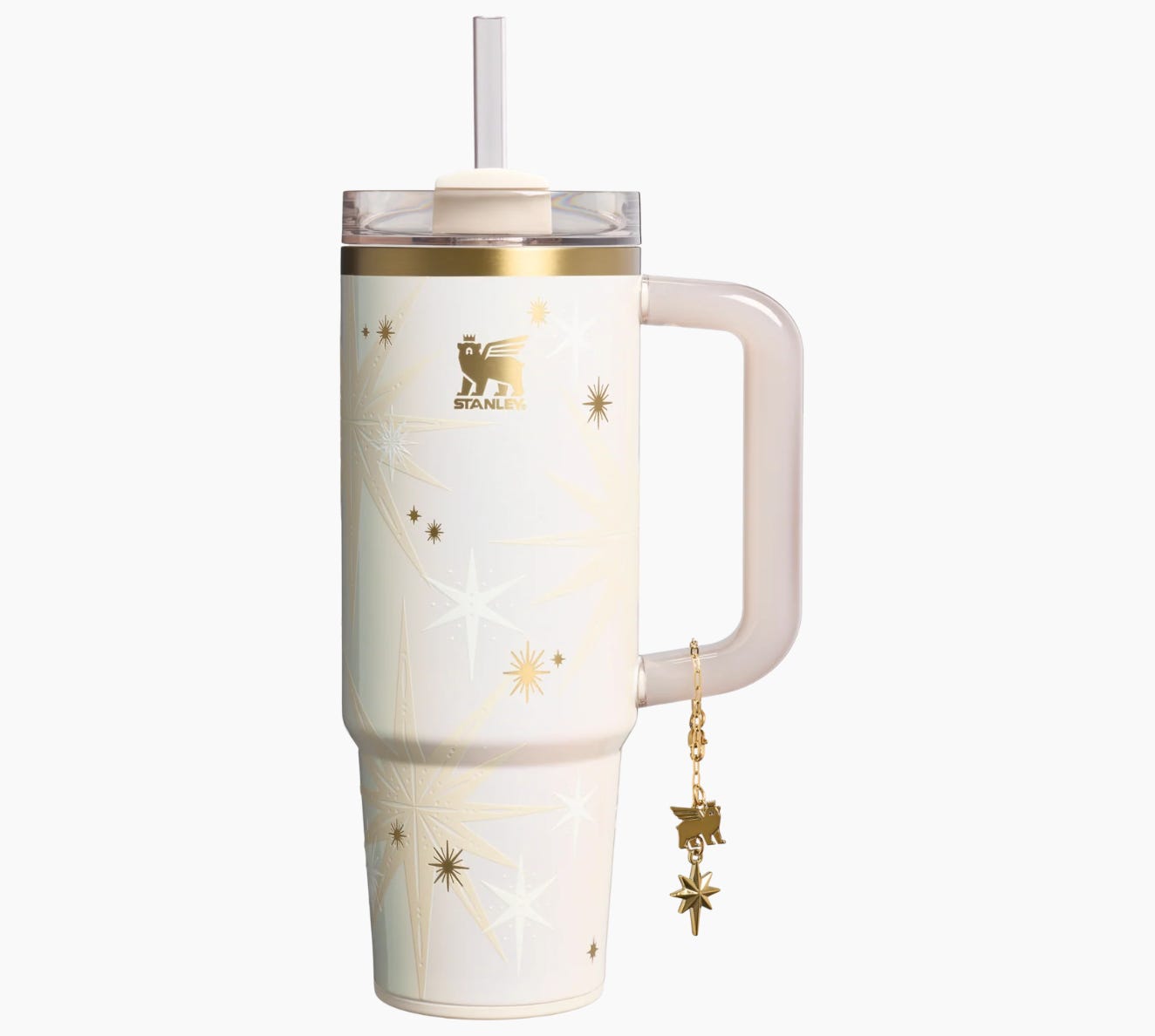
I don’t own a Stanley tumbler, but I use some of Starbucks’s gorgeous travel cups, which are a lesser trend.

I also own a Mean Girls merch knockoff of a Starbucks tumbler design.

I like Starbucks tumblers because they’re cute and bring a little happiness into boring humdrum life. They can invite conversation, too, as can any flashy accessory.
I don’t wear t-shirts very often — not because I think they’re awful, but because they don’t tend to work with my usual preferred aesthetic. But I do have some merch t-shirts. A tiny joy in something that bores me: an otherwise ordinary t-shirt. One of the underrated benefits of merch t-shirts is that they can end up starting casual, low-stakes conversations. Before a hair appointment last year or so, I recall having a fairly extended, pleasant, and no-stakes conversation with the receptionist about Sabrina Carpenter because of my t-shirt that day. Popstar merch t-shirts aren’t fashionable but they’re comfy and when you’re lonely, as I was at that time, even an exchange like that is far better than nothing at all. I didn’t wear the t-shirt to start a convo, but the unplanned nature of the interaction is an example of society working well: a tiny, low-key moment of happiness between strangers over a widely shared interest. Basic things will always, by definition, be the most commonly shared little joys. The conversation was possible because of Carpenter’s massive popularity — in other words, because she’s a super basic fav. She’s as close to a shared culture as we can get.
Fancy, sugary lattes, also notoriously basic, can ameliorate the boringness of everyday moments and build in some flashes of sociability. One can find deeper meaning in the popularity of seasonal lattes, such as the most basic choice, a classic PSL. But one can also make the equally apt and more concrete argument that getting overpriced coffee from a coffee shop is prosocial. Phoebe Maltz Bovy frames this argument well: “What is coffee out if not a relatively low-downside way of interacting with other human beings and leaving your home?” Yes, Maltz Bovy acknowledges, coffee out does cost more than the usually rudimentary coffees most of us can make at home, but “it’s hardly membership in a sorority or country club. It’s a tax of sorts you pay, and in exchange, you maintain the human-interaction muscle if you were otherwise a shut-in, or get a complicated from-the-outside drink without having to make it yourself if you were not.” Having just finished a chestnut praline latte from Starbucks, I agree. I’m not a shut-in, but today, that craving is the only reason I got dressed and left my lair for a few minutes.
I used to be in some ring- and nail-shaming groups on Facebook, where millennial women would tear into photos of badly done nails and cringe-worthy rings. This is not prosocial behaviour! I’ve already acknowledged my history of lurking in toxic online spaces—and weird Facebook groups in particular—okay??? I’m aware of the issue and I’m, uh, working on it. Definitely. Anyway, I noticed that a lot of the photos of rings and nails were drawn from Facebook groups about sugary lattes, women trying out different kinds and giving their thoughts to one another. Often, the photos would include one of the photo taker’s hands, thus becoming chum for ring- and nail-haters. Point is, even if only online, some lonely people can get a tiny social boost out of their lattes. As was the case in my conversation about Sabrina Carpenter with a hair salon’s receptionist, something is better than nothing at all. Starbucks’ or other shops’ sugary lattes can create conversation in person, too: a common dialect. This is the case for other beverages, of course, I’m usually curious about what’s in a cup, but the most prolonged answer will be a fancy latte.
In this way, through creating our shared culture, basic taste keeps the haters together, too. Katherine Dee makes a stronger claim than I have thus far, arguing of uber-basic trends like Labubu: “These fads are our monoculture.”
We might not all watch the same TV show or listen to the same albums (though maybe we’re starting to again, I feel like I definitely have musical reference points? Same with movie and TV), but we do all know about Labubus. And Crumbl. We all understand the reference, even if we didn’t participate.
Even the haters are socially glued together by monocultural monsters. We can talk about disliking Labubus, just as one can make positive conversation with fellow fans by displaying one. A monoculture isn’t necessarily a culture in which everyone likes one thing. Like the Karens of yore, basic bitches (a term I use affectionately, same with “Karen”) keep society afloat in ways that the haters don’t want to acknowledge, even as they reap the benefits.
Men have their basic interests, too — their joky shared arguments over pop culture, such as whether Die Hard is a Christmas movie, for instance. These conversations are examples of the prosociality of basicness, made possible by the common, basic reference point of an action movie. I don’t find the argument over Die Hard very interesting, but those of us who share that widely expressed sentiment are also being knit into the social fabric by the basic bros! I’ve not lost brain cells from hearing such arguments, and I have seen tiny connections made or bolstered. It’s normal! It’s good! Please argue about whether Die Hard is a Christmas movie!
Caveat time. As a terminally centrist (politically homeless? more like politically basic) overthinker, I have to acknowledge that there is a downside to basic hobbies: they can encourage unbridled consumerism. For the average basic bitch or broski, participation in basic pursuits is buying one Stanley Quencher 2.0 or watching Gladiator for the fiftieth time. Maybe crying over it — at least shedding a single, dignified tear, perhaps. Trying out nail tutorials on YouTube, watching Netflix romcoms, buying one Labubu, these are not in themselves problematic consumerism. Sometimes, however, people waste a lot of time and money in pursuit of an excessive hobby spurred by basic influence(r)s.
In a recent, much-discussed article, the NYT featured the story of a woman’s excessive expenditure on Labubus. This is not the first time the NYT has published a piece about the risks of Labubus’ allure, for some fans. This summer, The Guardian put out an article about the potentially addictive nature of “blind box” collectibles, such as Labubus. At that point, psychopathology enters the picture, not just ordinary greed.
Who can see the infamous floods of women snagging trendy Stanley drops and think that it’s healthy, prosocial behaviour? Last Fall, for instance, a few buyers caused antisocial mayhem over Target’s Wicked Stanley tumbler designs. And there have been other publicised kerfuffles over Stanley Quenchers.

However, consumerism is not just an issue among fans of basic things, like the Wicked movies and Stanley tumblers. A lot of nerd hobbies are just as consumerist, often encouraging amassment of overpriced collectibles, the appeal of which can be inscrutable to those outside the relevant fandoms. Some nerdy collectors are prone to spending beyond their means and unhealthily coveting colourful plastic and aluminium objects, too. Overconsumption and greed are not exclusive to the basic or feminine among us. They’re human flaws. Sometimes, they morph into ageless pathologies that we know more commonly under other names — as in the case of blind box collectibles that can lead to addiction by mimicking gambling, a risk Labubus share with “loot boxes” in video games. Consumerist vices, such as greed and addiction, are not unique to basic interests. They’re as old as storytelling.
In season 0, a prequel season in the Carmilla web series, viewers get some backstory for the widely disliked supporting character Lola Perry. Perry’s main character trait, annoyingly for a prominent character in a paranormal romance series, is her utter resistance to anything abnormal. Throughout seasons 1-2, Perry has tried her hardest to resist discussion and belief in the supernatural until she absolutely can’t anymore. She can be annoying, obsessively tidy, and a few times she resorts to prolonged, delusional states of denial. She’s aggressively basic.
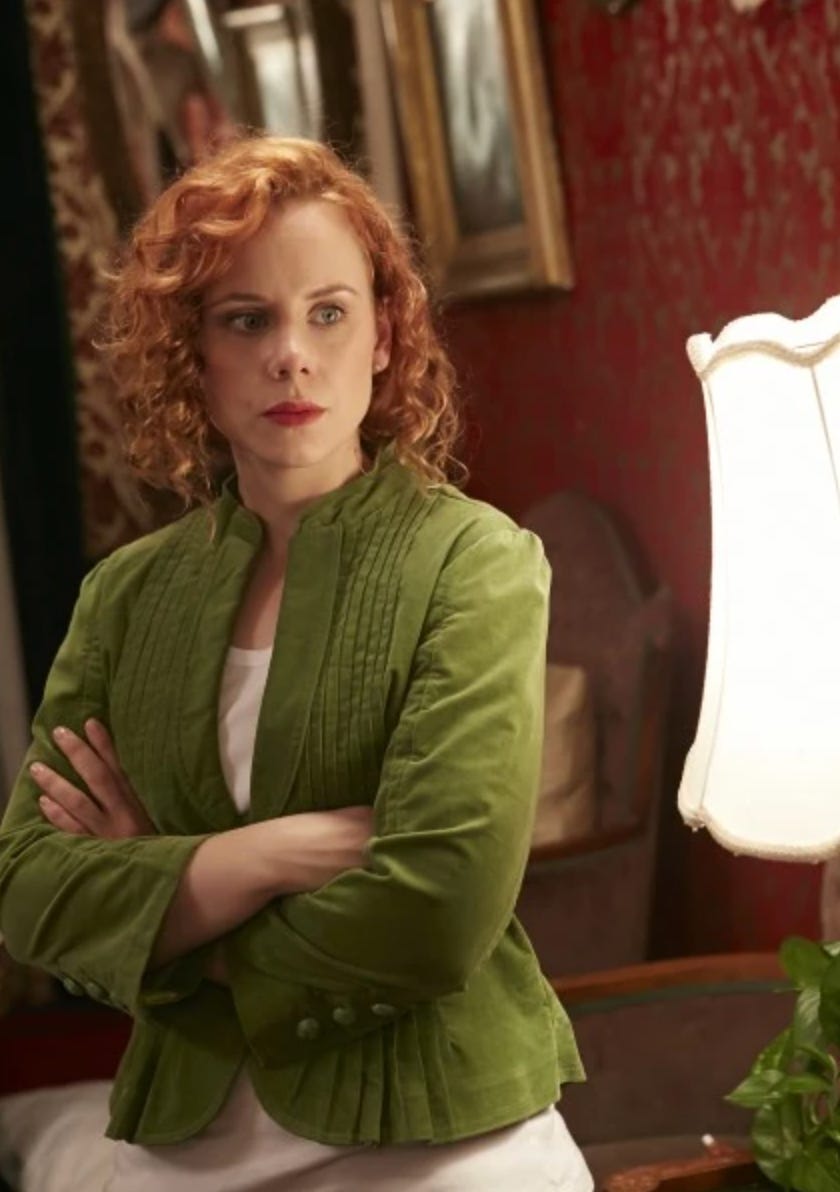
But in season 0, we learn a little bit about why Perry’s like this. Jarringly, she’s a woo-woo, New Age-y witch in season 0. A supernatural crisis ensues, and in the end, we learn that Perry caused it by accidentally releasing the Fairy Queen into our world. She gives context for the accident:
I’m pretty sure I’m the one that set her loose. I’m nothing special: average. Average student, average friend, average daughter. The rabbi at my Bat Mitzvah talked about how there was “no shame in being humble and predictable.” My best friend, she’s a genius, she’s gonna be a doctor, like, cure cancer or something. And here I am, Lola Perry. So, when I started reading about Wicca, it was my chance. There was supposed to be this amazing Otherworld and if I could see it that would mean I was special…
The Fairy Queen, in her climactic confrontation with the season’s heroines, tries to persuade Perry to side with her by appealing to her desire to be special, assuring Perry that she doesn’t think she’s ordinary and boring.
All the wonder in the universe will be yours, my extraordinarily girl… We will sweep everyone who ever made you feel small from the face of the earth.
After expelling the Fairy Queen, Perry tells the show’s titular vampire protagonist, Carmilla: “Okay, this never happened. I don’t know you. You don’t know me. [There’s] no such thing as fairies.” In season 1, it’s as if Perry has never known anything odd about Carmilla, despite learning very odd things about her previously, in the events of season 0. She’s in full denial. Back to basics.
What I find compelling about Perry’s evolution—from painfully basic, to seeking the extraordinary, and back to a harder-core version of basic—is the damage she causes to herself and others by trying so hard to flee the shame of being boring. I don’t think that shaming a woman for being basic will lead her to summon the evil Fairy Queen by mistake, but I do think that when we try too hard to push away the basic joys in life, we risk causing tears in real-life society and hurting people. Perry isn’t joyless! She makes cookies when she’s anxious. Even as someone who doesn’t like chocolate that much, I can always go for a warm chocolate chip cookie. Perry isn’t broody, intellectual, and glamorous like Carmilla, or a scientific genius like her bestie, but someone whose pleasures are normie and basic can be the glue that holds a bundle of eccentrics together. Fabric of society? Glue? Whatever, I’m not sticking to one metaphor.
Speaking as someone who’s non-binary in the sense that I enjoy both eccentric and basic stuff: I find it extremely cringe when someone’s self image relies on being not like basic bitches. I also find it annoying when someone is utterly resistant to trying something outside the box. It’s easy enough to find praise for the oddballs and loveable weirdos, though. Not so, for the Perrys of the world. One might think, in critical social justice-y terms, that making fun of basic bitches is “punching up,” while making fun of nerds is punching down, so, defending the basic people of the earth is unnecessary. But basic people are in fact individuals, and insults sting. NLOGs who rhetorically eviscerate basic women for liking a PSL on an autumn morning are not justified in doing so, even if they seem cooler by some antisocial standard. This behaviour is especially unfair because basicness plays a key role in keeping society together. Critics of basic bitches are benefiting from them, too. Poking well-meaning fun is fair game, but the outright resentment I often see and hear toward basic bitches is unjustified and wrong.
To a hypothetical reader who only likes obscure, experimental films: go see a romcom or action flick with friends, if you have the chance. You’ll enjoy the experience, especially if the movie is bad. To an anti-sugar-latte reader: try a PSL while they’re still in season and tell someone how it was. Strengthen the fabric of society, one basic experience at a time, even if it feels uncool.
Really loved this piece!! I'm reminded of the many people who say "ugh, I hate small talk!" -- not being able to do small talk is a skill issue. Plus, most of these basic things are neat precisely because they don't have any obvious culture war valence -- I would much rather a zillion pieces about Dubai chocolate or Die Hard than one more article about Sydney Sweeney.
Incidentally, I think Labubu is very cute! I'm not sure whether Labubu is a specific character (like Hello Kitty) or a species (like Pikachu), but I'm glad we have a new cute character in that vein who's fun to doodle, and that it was made by some random guy with no obvious IP ins. (Sorry, Baby Yoda!!) Actually, I like the character enough that I made my own mask and went as Labubu for Halloween, thrilling the 7-year-olds in my neighborhood.
😍