


So say what you want about it
I’m getting used to being out of my mind
I’m on the precipice
But I’m getting used to being borderline—Marisa and the Moths, “Borderline”
Borderline personality disorder (BPD) is one of the most slandered and least understood psychiatric conditions among the general public. Along with narcissistic personality disorder (NPD), histrionic personality disorder (HPD), and antisocial personality disorder (APD), BPD is categorised as a “Cluster B” personality disorder. But the very notion of a “personality” disorder is confusing to many people and BPD is most usefully thought of as a disorder of emotional regulation. Whatever.
Nobody seems to like Cluster B on the Internet or in the pop psych slop world.
I don’t know if one could call it a mere cottage industry anymore, the presses and newsletters and YouTube channels that churn out slander against people with Cluster B personality disorders. I’m careful with what I call a grift, rather than a mistake or a mere disagreement with me. But I think the slander-mill against BPD is a grift.
The idea that everyone someone dislikes is a Cluster B(itch) nightmare, rather than merely someone they dislike or someone who dislikes them, is intoxicating to people who need to get a grip. Such people are an easy market because they’re easy marks. Surely they do nothing wrong; everyone around them who seems put off by them must be pathologically hopeless in some way! Come on. This sort of content seems particularly fixated on NPD, which is adjacent to what I’m discussing here. But I’ve written about the “narcissism scare” a little bit already.
Lately, I’ve read an interesting range of Substack newsletters on BPD. On the one hand we have excellent writers such as Sorbie who come from a place of experience and deep learning. On the other hand we have people who refer to a “type of woman” as the “BPD slut,” and — I kid you not — people who argue that acceptance of women with BPD (whom they armchair diagnose as such, of course) is destroying the West. L-O-L. It makes me want to laugh, it makes me want to cry. People need to stop slandering those who have BPD, or armchair diagnosing people with it, or using BPD as a slangy putdown for anyone they dislike. I most often see BPD used as a putdown for women, it’s worth noting. Sometimes HPD too.
I’m no psychologist, and I certainly don’t know as much about BPD as Sorbie, but I do know enough to write about it in the capacity that I’m writing in right now, which is to say, as a moralistic schoolmarm who hates lies, and as a person who has empathy because I haven’t singed it out of myself as an alleged sin. I’ll keep my factual statements confined to what I know from books rather than hearsay.
I don’t want to spend a whole post dunking on half-literate liars, misogynists, and (yes) ableists. That doesn’t feel good and it gets boring and repetitive. Anyone who enjoys lying about and being cruel to people with BPD is presumably not interested in this post anyway. What I would like to communicate, instead, is care. I want to get across, as clearly as possible, the simple point that people with BPD suffer tremendously and are inherently worthy, as human beings whose hearts beat, feel, and love. Unless you’re doing a study on the aetiology of personality disorders, it usually doesn’t matter how the condition comes about — that’s a debate that can pointlessly take laypeople’s attention away from the actual experience of suffering from BPD. Even worse is that too much focus among laypeople on aetiology can often mislead them into thinking that BPD is a disorder in which people consciously manipulate those around them all the time for no reason. I read something like this the other day. Instead of thinking about abstract questions for experts, focus instead on the facts at hand: When you know someone with BPD, she or he is sincerely in pain much of the time and — when not in pain — is nevertheless often on the verge of a peculiar variety of agony most people can’t relate to.
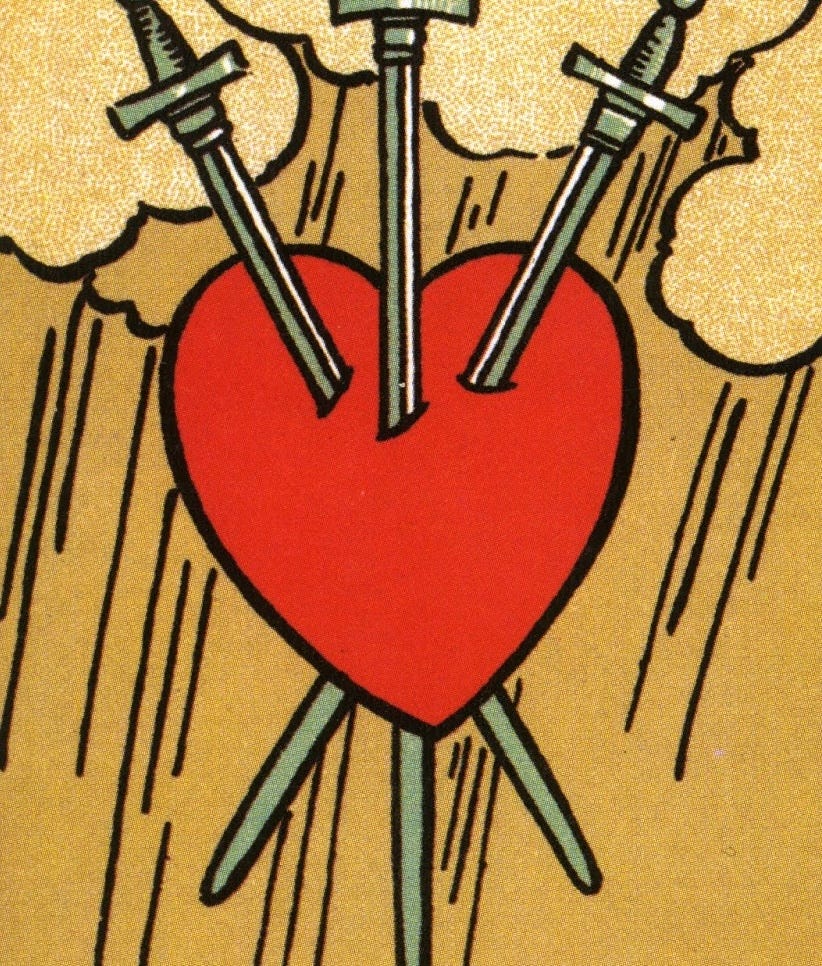
“I engage in behaviors out of desperation to prevent actual, possible, or perceived abandonment.” “My depressive spirals tend to be caused by fear of abandonment and resolve when that person returns or is able to calm me down.” “I have erratic and volatile relationships with others that go from seeing that person as a ‘hero’ to seeing them as a ‘zero.’” “I have a feeling of hollowness, as though I have a hole inside that can never be filled.” These are a few examples from a much longer list of BPD traits in Daniel J. Fox’s guidebook, Complex Borderline Personality Disorder (2021). “Complex,” because Fox focusses on the ways that BPD overlaps with other psychiatric conditions — those with which it has a high rate of comorbidity, such as bipolar disorder. To talk about what BPD is, though, in this short post, I don’t need to go through general criteria for personality disorders, or any formal lists of symptoms. Instead, I want to focus on the pain.
You know how hard it can be
To keep believing in me
When everything and everyone
Becomes my enemy and when
There’s nothing more you can do
I’m gonna blame it on you
It’s not the way I want to be—Emilie Autumn, “Opheliac”
In her popular memoir, Loud in the House of Myself (2011), Stacy Pershall writes about her experiences with BPD, bipolar, anorexia, and bulimia, which seems to be a relatively common combo. She writes at one point, “maybe we don’t dare hope for a good life, because a good life is a foreign concept.” The situation can feel entirely hopeless, particularly the abandonment spirals, during which “You can apologize until people think you’re crazy.” I want liars who slander people with BPD to read accounts like Pershall’s more often than lists of adjectives on Wikipedia. For that matter, please don’t self-diagnose based on Wikipedia either! Pershall and other memoirists who write about their experiences with BPD, like Kiera van Gelder, do a much better job communicating what matters about BPD than do Wikipedia or the DSM. Speaking of which, when did the DSM become a personality quiz for suckers rather than a medical manual, anyway?
I must add a paragraph of basic factual debunking, sorry. One of the most common myths about BPD that I still hear slung around is that it’s untreatable. I see this disinformation brought up as an excuse for wanting to ditch anyone with the condition from one’s life. But BPD is not untreatable. Pershall discusses treatment for BPD in a useful way, but of course myriad normal resources that aren’t memoirs are a click or a library visit away. In Pershall’s words, people suffering from BPD (or HPD for that matter) lack “things that most people learn as children,” like mindfulness, emotional regulation, interpersonal effectiveness, and distress tolerance. Dialectical behaviour therapy (DBT) is a programme of therapy specifically designed to help clients/patients learn these skills. And it works! Often! Shari Y. Manning, in her book Loving Someone with Borderline Personality Disorder (2011), even notes that DBT skills can be useful to practice for people who are trying to help someone close to them who has BPD, since the experience can be stressful. Everyone can improve at the DBT skillset, I think. People with BPD lack these skills that most people learn early in life, but that doesn’t mean they can’t improve at them. BPD is not untreatable. Plus, medications and other therapies can help treat the “surface structure content” of BPD, like anxiety and depression.
One significant issue with defusing disinformation about BPD is that certain people assume anything they read or hear from someone they clock as having BPD is false. Again, that’s disinformation. Focus on facts, not labels. I know I might be vulnerable to that accusation, that I “protest too much” when it comes to negativity toward people with BPD. Note what I have and have not said about myself above, though. I hope to keep this chaotic post separate from whatever experiences I might have, or that loved ones of mine might have, with BPD. Keep the armchair diagnoses to yourself. You shouldn’t be making them anyway. Stop making shit up.
Don’t say that people have BPD whom you don’t know have it. Even if it ends up true, you were willing to make a rather specific claim before knowing the facts, which is far from virtuous. Using BPD as an “accusation” is dull and vicious in the first place, suggesting that BPD is a character flaw rather than a psychiatric condition. If someone with BPD is ruining your life and refuses to get help, as can happen, use careful discernment to determine whether to boot them from your circle or not, and centre empathy in your approach. Again, people with BPD have souls like you and hearts, sensitive hearts. Even though people with BPD can struggle to maintain control of themselves, you have control of yourself. You are not without agency, and your morality is in nobody’s hands but yours. When approaching a conversation about BPD, centre love and truth and curiosity. For some reason, perhaps because it became infested with gender wars derangement, many people’s brains and hearts shut off when talking about BPD. Keep your brain and heart alive in these conversations. You never know whom you might be hurting or to what extent you might be damaging your own soul through vicious speech concerning BPD.
Nice article. I find myself returning to a tension that sits alongside the suffering and helps explain why BPD can be so difficult to treat.
People with BPD don’t arrive in your office looking for BPD treatment. They come to treat a mood disorder, substance use, self-harm, or to recover from a broken relationship. They don’t think they have BPD and if you suggested they did they might be offended.
Part of the challenge is that BPD is usually ego-syntonic. The thoughts, feelings, and interpretations associated with the disorder are experienced as reasonable and justified rather than as symptoms. The problem is perceived as being out there in the world, not inside the person.
This puts loved ones in a bind. The person is genuinely suffering while behaving in ways that make stable intimacy extraordinarily difficult. What has always struck me as tragic is that many hallmark BPD behaviors are attempts to prevent abandonment that inadvertently increase the likelihood of abandonment.
To me, that’s why discussions of BPD require both honesty and compassion. If we focus only on the suffering, we miss the interpersonal reality. If we focus only on the interpersonal reality, we miss the suffering. Both truths have to be held at once.
It’s so important to debunk the myths about BPD. It’s absolutely treatable, and people can achieve high quality of life while still living with a BPD diagnosis!