

apocalyptic feminism
a brief history of apocalyptic trajectories in feminist thought across three millennia

For me, one of the most interesting through-lines in the history of feminism is its recurrent connection to apocalyptic thought.1 The gist of this trendy idea is that the world’s redemption is, in some way, connected to the end of sex-based inequality or oppression. Apocalyptic feminism permeates interpretation of the Hebrew Bible, found precedent in Platonic thought, generated tension for early Christians, exploded with the early modern apocalyptic Jewish movements of Sabbateanism and Frankism, found a foothold in German and Polish Romanticism, and trickled into the first wave of feminism itself. That’s a lot to cover. I’ll do my best, cutting off there in the mid-19th century.
Further complicating matters, the trend splits in two directions. On the one hand, we have apocalyptic feminists who believe that sex-based inequality or oppression will only end with the world’s redemption. This is a relatively mainstream thought. On the other hand, we have the idea that efforts to end sex-based oppression or inequality are part of bringing about redemption.
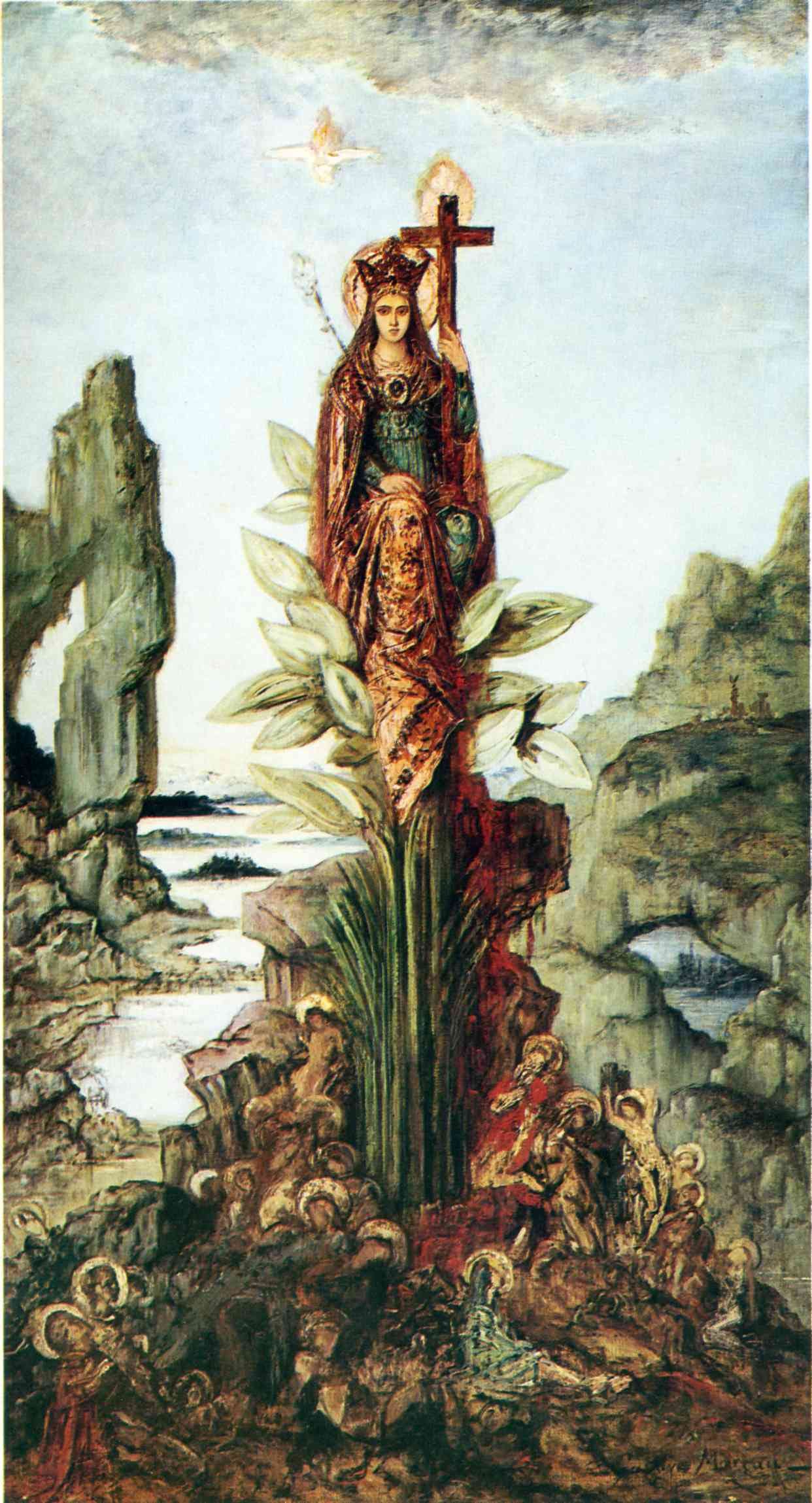
I will give two examples before getting into the history. Orthodox Jewish writer Devorah Fastag is of the school of thought that sex hierarchies only came about because of sin, and will thus be resolved in the end, but that efforts to resolve them now ought to be carefully limited. “What may be tomorrow’s holiness can be today’s sin.”2 The anonymous Frankist author (possibly Arieh Löw Enoch Hönig Edler von Hönigsberg) of the c. 1805-1816 essay “Something for the Female Sex,” however, argues that redemption cannot happen without us pushing for an end to sex-based oppression: “so long as the holy stock of womanhood remains subject to this state of affairs, the world will not be capable of being healed.”3 It’s not that the end will erase women’s subjugation; rather, the end requires some degree of women’s liberation to come about at all. Fastag and “Something for the Female Sex” represent two streams that I won’t be commenting on overtly throughout this post, but that will nevertheless be present in every paragraph, one way or another. Has the world been redeemed, eradicating gender norms, requiring us to enact this spiritual reality in the physical world? Will this happen in the future, for which we idly wait? Or does the world’s redemption require that we end the current gender status quo? These are questions that everyone has to ask in light of the apocalyptic feminist urge.
I want to clarify briefly what this post isn’t. It isn’t a history of women mystics. In fact many of the authors I’ll be discussing are men and a lot aren’t mystics, even if mysticism often accompanies apocalyptic feminism. “Mysticism, which may be defined as the brooding soul of the world, cannot fail of its oracular promise as to woman,” writes Margaret Fuller.4 But this post isn’t just about that. This post is also not a history in the normal sense, exactly, since I’ll be discussing not merely the contents of certain works but also much later commentaries on them that don’t give that much of a hoot about the ancient authors’ unknowable “intent.” Without further ado…
Hebrew Bible, part I: Miriam and Jeremiah
In the book of Exodus, Miriam, Moses’s sister, leads the women in a circle dance to celebrate freedom from Egypt — “Then Miriam the prophet, Aaron’s sister, picked up a hand-drum, and all the women went out after her in dance with hand-drums.”5 The idea that Miriam and the women danced in a circle specifically is a later interpretation but not far-fetched.
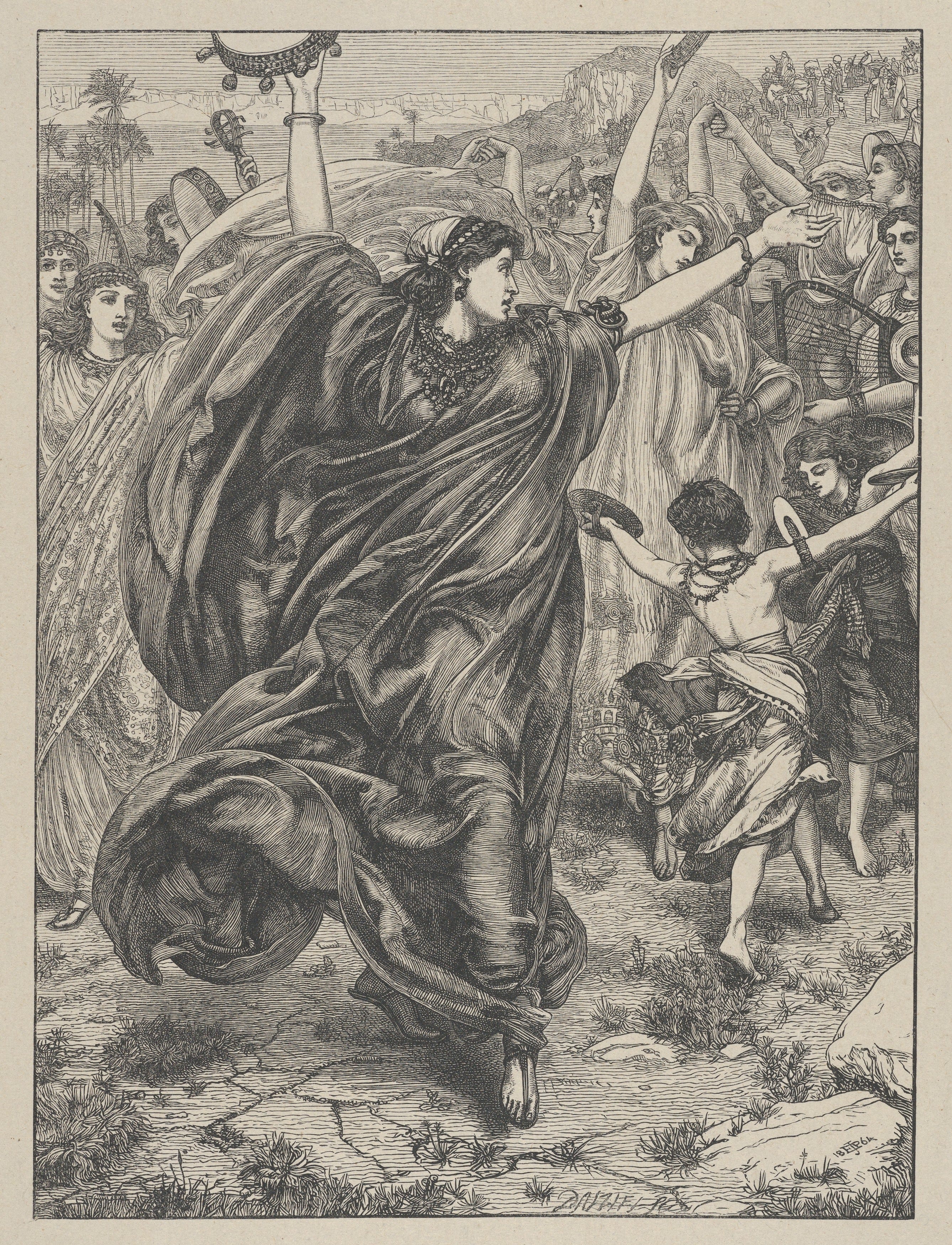

This passage is readily interpreted as a sign that redemption was coming and Miriam was working to bring it down. “Equality is represented by a circle… where all points on the circumference are equidistant from the center point, which represents God,” as Fastag writes.6 Thus she quotes the Me’or V’Shemesh: “Miriam the Prophetess… took out all the women after her and led them in circle dances according to the secret of nekeivah tisovev gever, in order to draw the upper light where there is no aspect of male and female.”7
But what on earth or in heaven is “nekeivah tisovev gever?” It comes from the prophetic book of Jeremiah: “For God has created something new on earth: nekeivah tisovev gever.”8 The exact meaning of nekeivah tisovev gever is unclear, but often interpreted as “a woman encircles a man,” which Fastag, “Something for the Female Sex,” the Lord Jacob Frank, and others interpret for various reasons as a prophecy that sex hierarchy will be abolished at the end times.9 “After the sins have been rectified, hierarchy will no longer exist,” writes Fastag.10
In sum, the Jewish tradition often interprets Miriam’s dance as a sign that redemption was about to happen, and that redemption entails the end of sex-based hierarchy. Yet the sin of the golden calf ostensibly reversed the Israelites’ course and redemption was swallowed up by evil.
Hebrew Bible, part II: Song of Songs
Song of Songs opens with a woman’s expression of desire: “Oh, give me of the kisses of your mouth, for your love is more delightful than wine.”11 “Something for the Female Sex” interprets this as a prophecy. In the end, women’s desires will no longer be constrained, and constraints on female desire have been spiritually disastrous for the world. Song of Songs is foretelling what the world is like after redemption. But a Frankist essay from 200 years ago is not our only source for such an interpretation.
“The Song of Songs unites our two worlds, the visible and the invisible,” writes contemporary Christian author Aimee Byrd. “And it ignites our eschatological imaginations.”12 She’s referring to the way she reads Song of Songs as pointing readers to Jesus and to the entirety of Christian tradition. “It’s apocalyptic in this way — it lifts the veil,” she writes, referring to the etymology of apocalypse as literally just revelation.13 Byrd argues that because we aren’t fully given up to Jesus, “we can’t properly articulate our desires… We chase after counterfeit lovers. We devalue life. We stereotype our sexuality. Our ideologies cannot give us the peace we seek. Then we come to the Song, and it summons our deepest desires within us.”14
While the author of Song of Songs may not have had anything about the eschatological restoration of sexuality or sex equality in mind, clearly, interpreters of diverse backgrounds interpret it as such. It’s a prophecy, it’s a lifting of the veil. It spurs our “eschatological imagination” toward an end times narrative that includes the healing of sexual relations. Readers can interpret Song of Songs similarly to the way the Jewish tradition interprets Jeremiah’s nekeivah tisovev gever, or not, but either way, it seems hard for many to resist connecting it with salvation.
Platonism
It might seem odd to include a discussion of the Platonic tradition’s utopian ideals in this post, but they’ll be relevant to the Christian trajectory, and utopianism is a large part of imagining a redeemed world, as has come up on Wailing & Gnashing a few times. Plato wrote about what a utopia is, and Plotinus attempted to put it in action, which seems a lot like redemption if the reader comes from an Abrahamic angle.
Above all — or rather, most relevantly to our present region of thought — the Platonic tradition emphasises that there is a higher, spiritual reality. This belief becomes foundational to much, but distinctly not all, apocalyptic feminism. If patriarchy is based on biology or whatever other earthly differences between men and women, it will likely evaporate in the spiritual dimension; where spirit overlaps with matter, spirit takes precedent. So what if a woman can’t throw like a man? She is equal in spirit. In this way much apocalyptic feminism is rooted in Platonising thought.
In the Republic (c. 375 BCE), Plato’s Socrates proposes unusually gender-egalitarian policies for his utopia. As Socrates summarises the matter in the Timaeus:
[W]e also touched on the question of the female guardians, and said that their characters were to be made to match the men’s more or less exactly, and that in every aspect of life, including warfare, all the women were to be assigned all the same tasks as the men.15
Plato was not entirely kind in his assessment of women. He also never tried to create his utopia, as far as we know. But one of his much later followers did attempt to found it. 3rd-century philosopher Plotinus, initiator of the style of Platonism now called Neoplatonism or Late Platonism, educated women as well as men in his circle (as had Plato). We read in his student Porphyry’s Life of Plotinus: “Several women were greatly attached to him, amongst them Gemina, in whose house he lived, and her daughter, called Gemina, too, after the mother, and Amphiclea, the wife of Ariston, son of Iamblichus; all three devoted themselves assiduously to philosophy.” The Late Platonic tradition would go on to feature several prominent women philosophers. Plotinus not only enacted egalitarianism in his own school, he also tried to found a Platonic city, where “the population was to live under Plato's laws: the city was to be called Platonopolis; and Plotinus undertook to settle down there with his associates.” He only failed, according to Porphyry, because of vicious behaviour by others who got in the way.16
Early Christian tensions
St. Paul writes: “So if anyone is in Christ, there is a new creation: everything old has passed away; see, everything has become new!”17 The establishment of a new creation through this radical break with history is a core theme of the Christian faith, especially the early church, which anticipated the end of the present world any day.
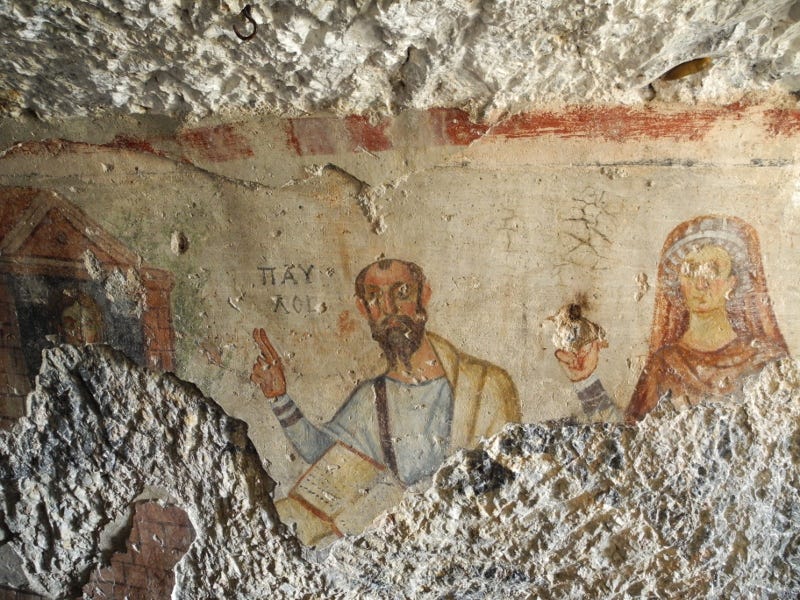
What does gender mean in a world that has been saved? We should not be surprised that such apocalyptic sentiment as ran rampant in the early Christian community would lead to deep consideration of the role gender should play in a redeemed world. According to some sources, it would seem that the early church did feature significant female leadership. The apocryphal 2nd-century Acts of Paul and Thecla has Paul travelling with a young, female follower called Thecla, who has authority to baptise herself. “I have received the baptism, Paul; for He that wrought along with you for the Gospel has wrought in me also for baptism.”18 Paul himself was something of a radical on gender — at times. Famously, he writes: “There is neither Jew nor Greek, there is neither slave nor free, there is neither male nor female; for you are all one in Christ Jesus.”19 But all was not so simple. Tom Holland writes of Paul that “even he, on occasion, had felt unsettled by the sheer subversiveness of this message.”20 Paul was not ready for such a shift, or at least he was not ready to put it into action. After the apocalyptic appearance of Jesus and during the impatient wait for the true end, why should old gender norms stay around? Yet “Paul, wrestling with this question, found himself torn,” writes Holland. “Revelation and upbringing pulled him in opposite directions.”21
The second-century Christian Gospel of Mary, likely composed in a non-Jewish milieu, reflects the Platonic influence on early Christianity and plays out the tension between redeemed, post-Christ gender ideology and conventional gender roles. Mary Magdalene, in this gospel, has been given special wisdom by Jesus, as “Peter said to Mary, “Sister, we know that the Savior loved you more than all other women.’” Peter thus asks Mary to preach. Mary’s status in Jesus’s estimation elevates her to be able to, in her words, “teach you about what is hidden from you.” Nevertheless, the very same Peter who had just asked for Mary to teach lashes out at her: “Did he, then, speak with a woman in private without our knowing about it? Are we to turn around and listen to her? Did he choose her over us?” But Levi sticks up for Mary, saying, “Peter, you have always been a wrathful person. Now I see you contending against the woman like the adversaries. For if the Savior made her worthy, who are you then for your part to reject her?” Instead, says Levi, we should not be making “any other rule or law that differs from what the Savior said.”22 In what we have of the text, Peter seems to offer no resistance to Levi’s speech. Peter’s reversal(s) in the Gospel of Mary seem to reflect an unease with the apocalyptic gender scenario. The Savior’s law is quite different from what Peter seems to expect. It’s hard to abide by otherworldly laws of gender in a world that still seems unredeemed. However, particularly in the case of the un-Jewish Gospel of Mary, otherworldly law wasn’t the only culturally contentious influence. Gnostic Christians were deeply influenced by the Platonic tradition as well, which may give us a clue as to some of their more out-there gender politics. After all, a fragment of a Coptic translation of the Republic was even found at Nag Hammadi along with fragments of many Gnostic Christian works.
Late antique Jewish apocalypticism
In Sefer Zerubavel, one of many Jewish apocalyptic works written in the late antique Near East (likely in the early 7th century), we see the mother of the Messiah not as meek and humble but as a cosmically powerful warrior.
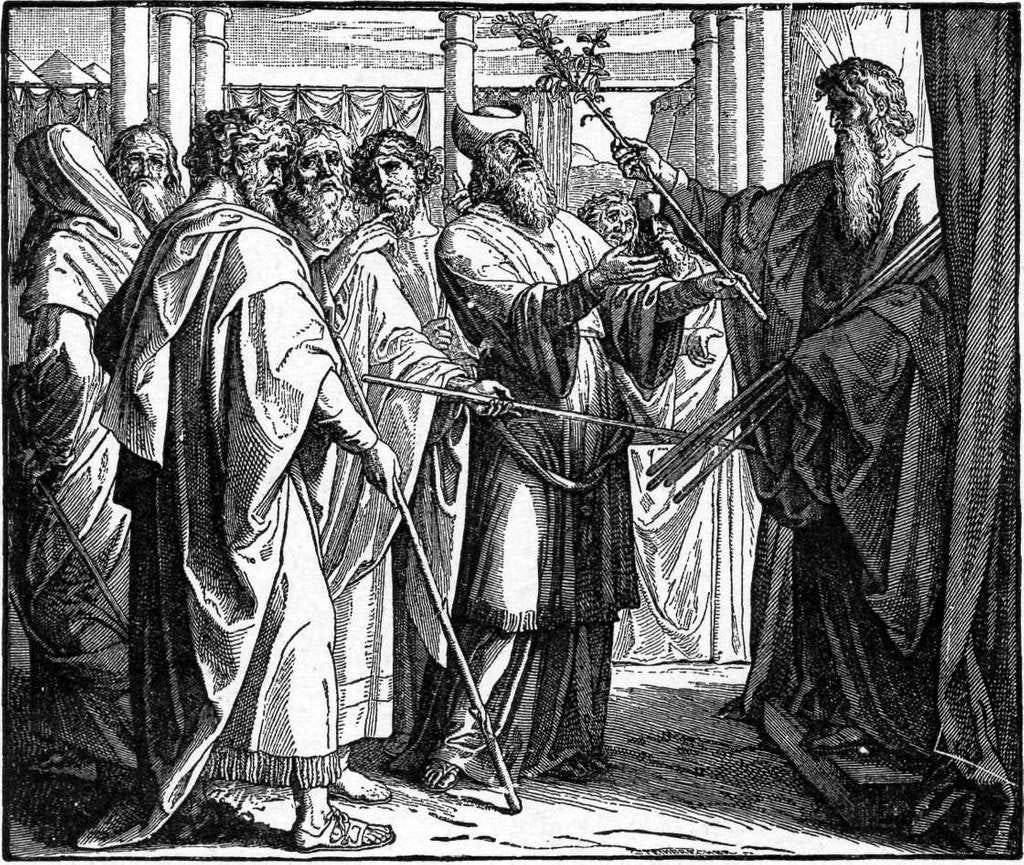
The Lord will give Hephzibah, the mother of Menahem b. Ammiel, a staff for these acts of salvation. A great star will shine before her. All the stars will swerve from their paths. Hephzibah, the mother of Menahem b. Ammiel, will go forth and kill two kings, both with hearts set on doing evil.23
Hephzibah fights alongside Mashiach ben Yossef, the Messiah son of Joseph, who goes before the final Messiah to wage holy war. Later, Mashiach ben Yossef will die in a cataclysmic clash with Armilos/Balaam, and Hephzibah will bear Mashiach ben David, the final Messiah, who will resurrect Mashiach ben Yossef and defeat Armilos.24 She’s the common Davidic Queen Mother archetype but is, to the extent of my knowledge, the only true warrior woman in the Jewish tradition. (Others like Devorah lead in battle or kill through deceit like Judith or Yael; Hephzibah goes out into battle to fight.)
Scholarship has argued that we find a paradox in how Sefer Zerubavel handles the Christian figure of Mary. On the one hand, Sefer Zerubavel denigrates Mary by implying a parallel between her and the statue who, after intercourse with a demon, rebirths Balaam, who’s a common Jesus parallel in rabbinic discourse. On the other hand, Mary is positively, even mightily paralleled in the Queen Mother Hephzibah.25 A connection between Mary and feminism is made by several works I discuss throughout this post (“Something for the Female Sex,” Margaret Fuller’s Woman in the Nineteenth Century, etc.), and would be worth exploring more another time. Nevertheless it seems to crop up here as a question. Is Mary a liberating image for all or is she too passive to resist evil usage?
Providing a bit of an ominous hum in Sefer Zerubavel is the Jewish legal prohibition on women bearing arms — and just, like, the entirety of gender norms in general. In Torah, we read: “A woman must not put on man’s apparel, nor shall a man wear woman’s clothing; for whoever does these things is abhorrent to the Eternal your God.”26 Targum Onkelos, an important, ancient, Aramaic translation and exposition, holds that the prohibition on men’s apparel concerns weapons. Perhaps Hephzibah’s staff doesn’t count as a weapon (after all, it’s only a staff), but her role is still an area of tension. Why must she go out? Why must she later guard the gates of Jerusalem? Perhaps in the end certain things are turned topsy-turvy, in an apocalyptic feminist way. Or maybe Sefer Zerubavel would hold that Lord Jacob’s antinomian dictum was right all along: “It is proper for women to bear swords.”27
Jewish messianism, part I: Sabbateanism
Let’s skip ahead a few… okay, a lot of centuries. In the mid-17th century, a learned Jewish man named Shabtai Tzvi declared himself the Messiah.28 His wife at the time, known as Sarah the Ashkenazi, had been claiming that she would marry the Messiah, so the marriage worked out tidily for them both. Thanks in part to Sarah’s efforts, Shabtai’s movement, which would come to be known as Sabbateanism, was pretty much gender-egalitarian. Sabbatean women served as prophetesses, led services, and chanted Torah. The Messiah had come: to a large extent, Jewish religious law was off the table.29 A Sabbatean credo goes, “I believe with perfect faith that this Torah will not be changed and there will not be another Torah, only the commandments are null but the Torah will be for ever and ever.”30 As often happens, millenarian hopes came with feminist gains.
Many Sabbatean prophetesses are still known by name from the records of onlookers. These prophetesses were part of a massive, populist movement in which uneducated people, including children, began prophesying the authenticity of Shabtai’s messianic status. Leib ben Ozer, an eyewitness, recounts that prophets:
…arose by the hundreds and thousands, women and men, youths and maidens, and even small children. All of them prophesied in the Holy Tongue [Hebrew] and in the language of the Zohar [Aramaic], and none of them knew a word of the Holy Tongue, not to speak of the language of the Zohar. And thus it was: they would fall to the ground as though smitten with epilepsy; foam would issue from their mouths, and they would convulse, and they would utter mysteries of kabbalah on many subjects in the Holy Tongue.31
So too would they perform alleged miracles. Anti-Sabbatean fanatic Rabbi Jacob Emden recalls that his own father told him of Sabbatean women who would claim to be able to eliminate evil spirits. As they worked to kill the evil spirits their clothes would become bloodied from apparently nothing but thin air. One gained the ability to create beautiful scents “with her hands.”32
In the case of women speaking in Hebrew and Aramaic and discoursing upon the extremely difficult area of study that is kabbalah, one must wonder whether they were simply venting thoughts on topics they’d studied in secret — and whether they supported Shabtai because his movement allowed them to do so. Mystical states, claiming divine revelation, these have always been ways for women in patriarchal faiths to gain credibility and a voice, more famously in the Catholic context. Whether they were deceiving people intentionally is a separate matter. Ecstasy can catch us all given the right setting.
Jewish messianism, part II: Frankism
Frankism emerged in the mid-18th century out of Sabbatean communities and lasted as a discernible movement until the 1880s or 1890s. Unlike Sabbateanism, which is intensely spiritual in nature, Frankism is a radically materialist faith, shunning any belief in non-material realities. Most importantly for our context, Frankism rejects the idea that Torah Law (halakha) has ever been valid or necessary. It adopted a humanistic antinomianism: rejection of whatever law doesn’t facilitate human flourishing in this world. Thus, the Jewish religious subjugation of women has always been wrong, per Frankism — not just now that the Messiah has arrived.
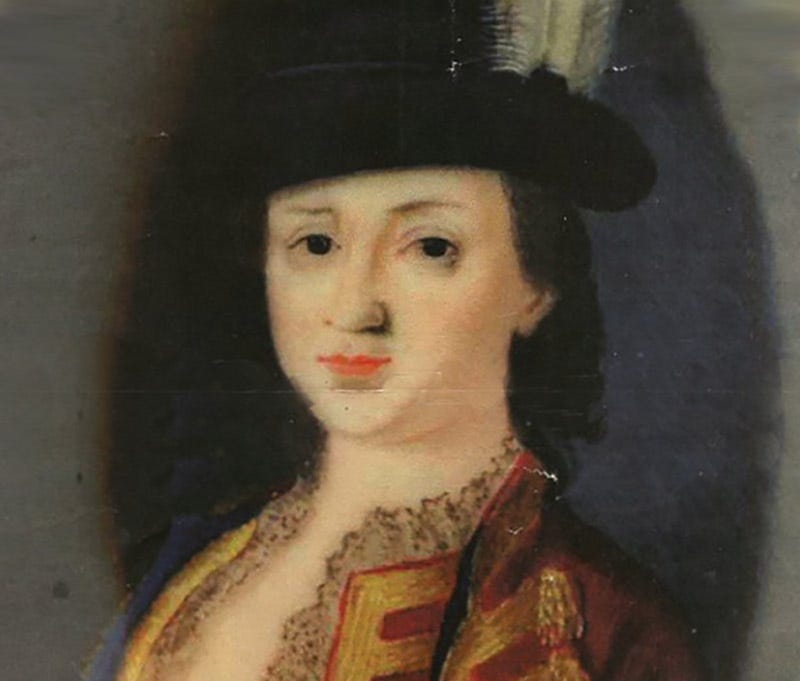
Frankism’s central focus is the Holy Maiden, its Messiah, incarnate as the Lady Eva Frank, who was born in 1754 and departed in 1816. Lady Eva’s father, the Lord Jacob Frank, served as Her foremost prophet and as Her mentor. Elevating women was a key pursuit for Frankists, who worshipped Lady Eva. “Something for the Female Sex,” composed in Lady Eva’s court after Lord Jacob’s departure, argues that we must “elevate the feminine above all things.” Lord Jacob had already argued that it’s impossible to pursue the redemptive Maiden in a land without freedom and respect for women:
At the place of Ishmael [i.e., Islamic lands], one neither reaches — nor is it possible to pursue — Her, for there the woman is an enclosed slave and none honour her. But in that estate [i.e., Christendom] they respect maidens and ladies, for even the greatest lord stands before a lady with his head uncovered, stands before her and pays her compliments like a servant.33
“Something for the Female Sex” and Lord Jacob make much of the fact that women in Christendom, unlike under Islamic rule, are able to go about with their heads uncovered.34 Through a certain scriptural reading, Lord Jacob determined that women’s heads are symbolically connected to the Maiden, who is the divine “head.” He taught that Christendom’s relative care for women “is all a sign for the future” and both he and “Something for the Female Sex” argue that the higher status of women in Christendom is due to the Christian faith possessing Mary as a foreshadowing of the Maiden. Although the impact of Frankism on contemporary religious thought is minimal (setting aside its loose connections to Reform Judaism), we can see its parallels in German Romanticism and its impact on Polish Romanticism, with which it was contemporary
German Romanticism part I: philosophy
According to Margaret Fuller, Germany has always instinctively held women in high regard. “Germany did hot need to learn a high view of woman; it was inborn in that race.”35 One can find much meat to munch on with regards to German Romantic views of women, but I want to start with something more abstract.

One of the most prominent philosophers associated with German Romanticism is G.W.F. Hegel (pronounced like Bagel with an H). Although it might be surprising for those familiar with Hegel to see him come up here, he proposes an interesting, foundational idea that would become a feminist commonplace over a century later among writers such as Simone de Beauvoir: that love can only exist between equals. I debated whether to include this section but it provides an interesting foreshadowing of Margaret Fuller’s thought.
I don’t need to go into Hegel’s entire early conception of love, just the aspect relevant to feminism and redemption. As Frederick Beiser explains, for Hegel, “love is the paradoxical process whereby the self both loses itself (as an individual) and finds or gains itself (as a part of a wider whole).”36 In love, we find ourselves in something greater. This might seem paradoxical at first glance but isn’t on second glance. We are only truly ourselves when we are part of a greater whole, broadly speaking. Beiser also explains that the early Hegel argues that “where subject and object are one there is something divine, and that subject-object identity is the ideal of every religion,” subject-object identity being what is found in love.37
All this sounds very lofty, but the early Hegel makes a pretty concise case that true love can only exist when neither party is dominant over the other. In a 1797-1798 fragment on love, Hegel writes that “the object, severed from the subject, is dead; and the only love possible is a sort of relationship between the living subject and the dead objects by which he is surrounded.” That’s not so good. “Since something dead here forms one term of the love relationship, love is girt by matter alone, and this matter is quite indifferent to it.”38 Love with an object is deficient, with one side not giving a darn, and the subject opposed to the object. It is solipsistic. That’s intolerable. When the subject finds true love, things are different: “True union, or love proper, exists only between living beings who are alike in power and thus in one another’s eyes living beings from every point of view; in no respect is either dead for the other. This genuine love excludes all oppositions.”39
Now, some nerd will stop me rightfully and point out that Hegel isn’t necessarily making a sociological point here about equality between the sexes. But he sort of inescapably is. Fallen love, love that is between a subject and a being viewed as a servile object, is necrophiliac in radical feminist Mary Daly’s terms. True love is between fully vital beings of equivalent power. It cannot be objectifying. Disagree if you will, it’s easily adopted as a Beauvoirian point and ties in to an idea found in “Something for the Female Sex”: that neither the male nor the female can be dominant in healthy love. Supremacist frameworks corrupt love. Hegel would probably not have considered himself an apocalyptic thinker, and perhaps not a feminist, but this fragment serves a whiff of both and will become relevant again as we proceed.
German Romanticism part II: literature
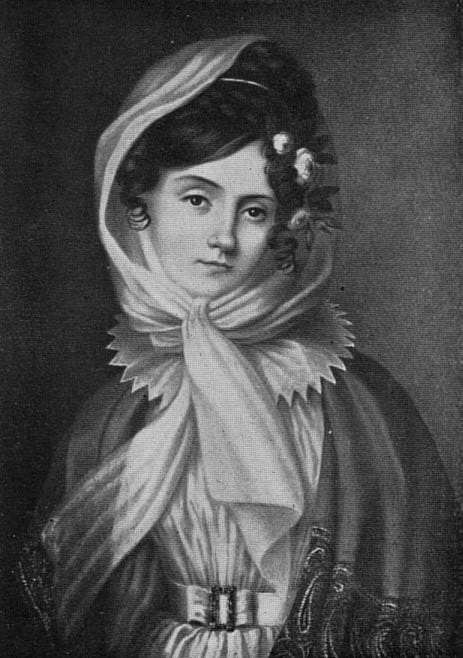
Johann Wolfgang von Goethe, a lodestar of all literature since his time, was an unwitting friend to Frankists, even as he himself disliked the movement. He had more than small affection for renowned pianist, composer, and significant late Frankist Maria Szymanowska.
Goethe dedicated his poem “Atonement,” part of his Trilogy of Passion, to Szymanowska, “a Polish lady, who excelled in playing on the pianoforte.” Goethe, one might say, was a fan of women’s beauty and capacity for producing beauty.
Wrote Margaret Fuller of her near-contemporary Goethe:
In all these expressions of woman, the aim of Goethe is satisfactory to me. He aims at a pure self-subsistence, and free development of any powers with which they may be gifted by nature as much for them as for men. They are units, addressed as souls. Accordingly, the meeting between nan and woman, as represented by him, is equal and noble, and, if he does not depict marriage, he makes it possible.40
Per Fuller, Goethe views both men and women as self-contained “units,” and as Fuller argues, you can’t have unity without units. To form a good “marriage,” both units need to be whole people. But more on Fuller anon. Fuller makes this argument based on several of Goethe’s works but here I’ll focus on Faust, of which Fuller writes: “In Faust, we see the redeeming power, which, at present, upholds woman, while waiting for a better day, in Margaret.”41
The plot of Faust is well-known, and I will concentrate on its lorn heroine Margaret/Gretchen. At the end of Part 1, Gretchen, left in ruins by Faust, seeks redemption and finds it. “Judgment of God! I give / Myself to you.” Mephistopheles thinks this is the end for her — “She is judged.” Yet a voice says laconically from heaven: “Is saved.” The power of her piety overcomes the odds.
We find, however, at the end of Part 2 that her powers extend beyond herself. In fact, women’s prayers in general have a broadly redemptive power. This is why Goethe fits my theme here. Nearing the end of Part 2 of Faust, angels sing:
Loving-holy women gave,
Penitent, the rose to me
That helped win the victory
Helped the lofty work conclude
And this precious soul to save.
And ultimately a chorus hymns:
The Eternal-Feminine
Lures to perfection.
The literature written on the Eternal Feminine could fill a hundred-hundred posts but I’ll refrain. Goethe, point is, associates femininity (or femality, to adopt a Fullerian term) with redemptive power. In doing so he stereotypes women, sure, but elevates them. Is Gretchen not flawed? Nevertheless her piety is the saving grace of herself and others. Goethe did not look toward the end of days in Margaret, but the idea of femininity as tied to ultimate redemption is loud and clear.
Polish Romanticism, Towianism, Frankism
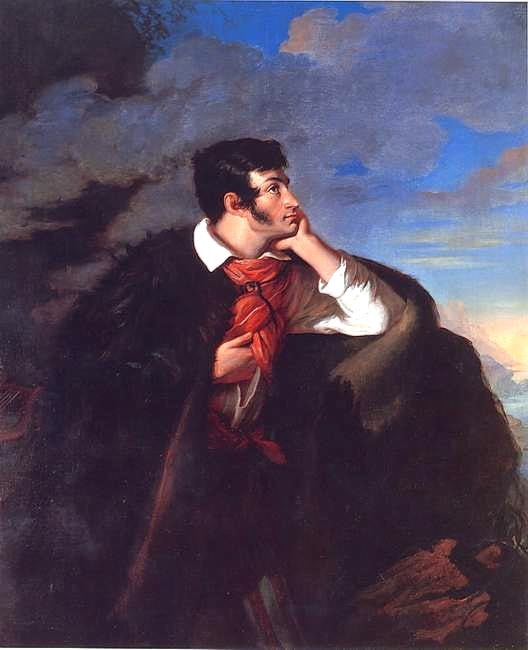
Polish Romantic author Adam Mickiewicz may have been of Jewish descent and may have been a Frankist. He married into a prominent Frankist family, of that much we can be certain. In fact he married Maria Szymanowska’s daughter. Everything Romantic seems to revolve around her. (And like, same.)
Although he was a Christian, and although he certainly did not identify himself as a Frankist, Mickiewicz had more than slight contact with the movement, whether through his own family or through his in-laws. Frankist themes loom large in Mickiewicz’s works, especially his apocalyptic masterpiece, the 1832 play Dziady (Forefather’s Eve) part III.42 Some scholarship finds in Dziady III plenty of thinly veiled Frankist allusions.
Perhaps uncommonly for a play, Dziady III includes overtly prophetic material concerning the future of Mickiewicz’s beloved and beleaguered nation, Poland. Abraham G. Duker traces the ways many of these prophetic lines likely reflect Frankist ideas and I find his arguments persuasive. One of the most famous speeches in Dziady III concerns an enigmatic Messiah figure, a “man of dread,” who will revive Poland and the world.
But see — a child escapes, grows up — he is our savior,
The restorer of our land!
Born of a foreign mother…
Although Mickiewicz is prone to deifying himself and his references to a cross in relation to this figure are clearly Christian in aesthetic, Frankism also views the cross as an important symbol (for non-Christian reasons) and as Duker writes after going through many details of the prophecy, the “man of dread” is a better fit with Lord Jacob Frank. “Frank’s second coming is indeed that of a ‘man of dread’. Frankist this-worldly theology also stressed the chosenness of Poland[.]”43 I find it useful to emphasise Mickiewicz’s likely Frankist leanings and the apocalyptic content of Dziady III upfront to clarify the significance of its brief episode of the divine feminine.
Perhaps not coincidentally, the primary female presence in Dziady III is a girl named Eve (recall the Lady Ewa/Eva/Eve Frank is the Frankist Messiah). We see her pray piously for the welfare of Poland and the downfall of its Russian oppressors. In a dream vision, she speaks to a rose, which compares itself to St. John resting on Jesus’s chest. Eve describes her vision:
O miracle, O Virgin! She
Bends and gazes downward. See,
Now she gives the holy child
The wreath, and Jesus, smilingly,
Throws the flowers down to me.
The spirits make a “heaven in my room,” remarks Eve. Is Eve the bright saviour of Poland and the world? Frankist doctrine, especially as expressed in the Prophecies of Isaiah, foretells the second coming of Lord Jacob Frank and of Lady Eva Frank both, the former terrifying, the latter comforting and the true Redeemer. It also lends significant weight to Mary as the foreshadowing of the true Holy Maiden. I’m not alone in finding Eve to be a redemptive, apocalyptic figure in Dziady III. Ursula Phillips, the biggest inspiration behind this post, writes of her similarly, albeit with less Frankist know-how.44
On 30 July 1841, Mickiewicz became an avid convert to the Towianist movement, the start of a theological love affair that apparently lasted until his clash with the movement’s founder in 1846. As Duker explains:
A new chapter in Mickiewicz’s mysticism was initiated with his conversion to the teachings of Andrzej Towianski (1799-1878), who launched a Polish messianist movement, based on the notion that chosen “Israel spirits” and the three “Israel nations,” the Slavs, the French and the Jews, were to lead mankind into a new epoch of Grace.45
Phillips analyses the gender politics of Mickiewicz’s Towianist lectures in the 1840s at the Collège de France and finds in them a mystical sort of feminism. She quotes him as praising Poland on women’s behalf, as “the great question of women’s liberation is significantly more advanced in Poland than in any other country,” with which Frankist sources would largely agree.46 (However, Lord Jacob Frank stressed Russia’s veneration for women too.) In an 1844 lecture, Mickiewicz argues:
In the early centuries of Christianity women did not fear the seriousness of this religion and did not stubbornly keep the counsels of the pagan priests: in Christianity they guessed through feeling a higher and stronger life. Today that same feeling warns them that they have nothing to expect from philosophical and social systems.47
Spirituality, self-sacrifice, these Mickiewicz emphasises in his apocalyptic feminism. One recalls in reading this passage the example of Thecla, unafraid to occupy Christian authority, or perhaps of Perpetua, the ancient Christian prophetess who allegedly walked to her martyrdom “with placid look, and with step and gait as a matron of Christ.”48 Women hold great, eternal strength, Mickiewicz believed, but through practical spirituality, not lofty metaphysical concerns. Along with that of his friend, American feminist Margaret Fuller, some scholars have dubbed Mickiewicz’s gender politics “apocalyptic feminism.”49 Hence the entire topic of this post.
Phillips writes that, while he never really tried to make feminist progress outside the realm of ideas, “Mickiewicz discovered in Fuller not only the fullest embodiment of his spiritual ideals but also a model for their pragmatic transference from the predominantly spiritual domain into the social and political.”50
And now we reach the culmination of our train of thought in Fuller. Could you tell throughout this that I’ve been excited to discuss her again, however briefly?
Margaret Fuller’s apocalyptic feminism
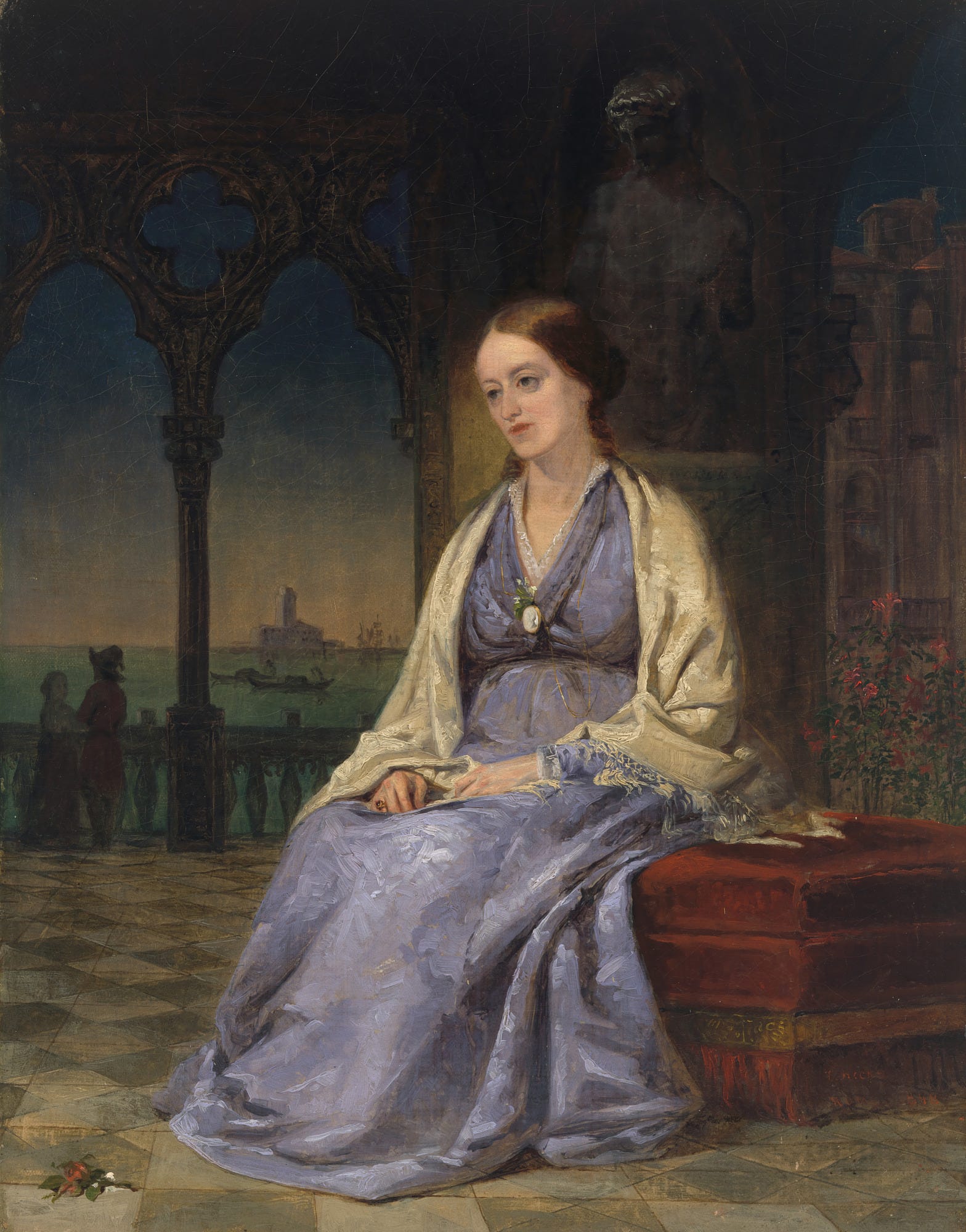

We believe the divine energy would pervade nature to a degree unknown in the history of former ages, and that no discordant collision, but a ravishing harmony of the spheres would ensue.
Yet, then and only then, will mankind be ripe for this, when inward and outward freedom for woman as much as for man will be acknowledged as a right, not yielded as a concession.51
Margaret Fuller’s 1845 masterpiece Woman in the Nineteenth Century is perhaps the ultimate expression of apocalyptic feminism. Although Fuller makes practical demands throughout the work, she centres the spiritual dimension of feminism, using the language of soul and immortality to prove the true equality of women with men. In this way we can see the culmination of the great trajectory kicked off by Plato and a mirror of Hegel. Whatever its other consequences, a strong focus on the eternal soul seems oft attended by a belief in the equality of woman and man. Fuller writes, for the most part, approvingly of mystic Emmanuel Swedenborg’s philosophy, noting especially his idea that “[m]an and woman share an angelic ministry, the union is from one to one, permanent and pure.”52 In other words, Swedenborg’s “large and noble” view of womankind is tied to his view of the equality of souls in spiritual marriage, like Fuller’s.
One of Fuller’s invigorating thesis statements reads:
Let us be wise and not impede the soul. Let her work as she will. Let us have one creative energy, one incessant revelation. Let it take what form it will, and let us not bind it by the past to man or woman, black or white. Jove sprang from Rhea, Pallas from Jove. So let it be.53
I think it’s clear already why Fuller is the apotheosis of apocalyptic feminism. She outlines so clearly the redemptive role of the feminine or femality, the importance of ending sex-based oppression for the world’s redemption, the role of religion in feminism (“I wish woman to live, first for God’s sake”), the need for equality in love…54 Most of my loose ends tie up in her.
As for Fuller’s own faith — it’s complicated. How can it not be? Some scholars find in her spirituality hints of her mentor Mickiewicz, of his mentor Towianski.55 She writes in her 1842 “Credo” — and I find this passage so moving that I will leave in almost all of it —
Would I could myself say with some depth what I feel as to religion in my very soul. It would be a clear note of calm security… I am grateful here, as every where, where spirit bears fruit in fulness. It attests the justice of my desires; it kindles my faith; it rebukes my sloth; it enlightens my resolve. But so does the Apollo, and a beautiful infant, and the summer’s earliest rose. It is only one modification of the same harmony. Jesus breaks through the soil of the world’s life, like some great river through the else inaccessible plains & vallys. I bless its course. I follow it. But it is a part of the All. There is nothing peculiar about it, but its form.56
conclusion
Apocalyptic feminism through the ages has sometimes been a vibe more than a school of thought. It has range. It has manifested as a gem in materialist and spiritual settings. It has found its footing in the classic works of feminism and in those of writers who would likely not have considered themselves feminists. It persists.
The idea of a higher reality (the Platonic thread) or at least a future perfection (as in the materialist faith of Frankism) has driven speculation concerning the end of sex hierarchy for eons. It has been at odds with itself: the radical, Frankist-to-Fuller thread has argued that universal perfection requires us to strive for the end of sex-based oppression, while the more conventional throughline has presented us with the idea that sex hierarchy will be eliminated after redemption or some other millennial occurrence (the arrival of Shabtai or Jesus, for instance). The extent to which we ought to engage in feminist agitating prior to that redemption varies within the latter strain.
I wish I could’ve presented you, hypothetical reader, with one clean narrative. I think we have seen in Fuller the knotting of just about all the threads; in her we have the Frankist legacy, the Platonic and the Christian, the mystical and the political. But there are always apocalyptic feminist threads that exist in tension, as I’ve highlighted, and to downplay them would be unfair to history. I have not provided a fully tidy narrative because there is none. At least not until the end times, I suppose.
Will she not soon appear? The woman who shall vindicate their birthright for all women; who shall teach them what to claim, and how to use what they obtain? Shall not her name be for her era Victoria, for her country and life Virginia?57
I’m including “proto-feminism” as feminism. For how I define feminism, see “what even is a feminist?”
Devorah Fastag, The Moon’s Lost Light: Redemption and Feminine Equality (Targum Press, 2016), 118.
“Something for the Female Sex,” in Ada Rapoport-Albert, Women and the Messianic Heresy of Sabbatai Zevi 1666-1816 (Littman, 2011), 332.
Margaret Fuller, Woman in the Nineteenth Century, 1845 (Dover, 1999), 54.
Exodus 15:20. This episode is the basis for a popular song among contemporary liberal Jews, “Miriam’s Song” by Debbie Friedman.
Fastag 74.
Fastag 75.
Jeremiah 31:22.
For Lord Jacob’s thoughts, see Words of the Lord §198.
Fastag 56.
Song of Songs 1:2.
Aimee Byrd, The Sexual Reformation: Restoring the Dignity and Personhood of Man and Woman (Zondervan Reflective, 2022), 197.
Ibid.
Byrd 196.
Plato, Timaeus, in Timaeus and Critias, translated by Robin Waterfield (Oxford University Press, 2008), 4.
Porphyry, Life of Plotinus, translated by Stephen MacKenna, 1917 (accessed at Wikisource).
2 Corinthians 5:17.
Acts of Paul and Thecla, translated by Alexander Walker, Ante-Nicene Fathers, vol. 8, accessed at New Advent.
Galatians 3:28.
Tom Holland, Dominion: How the Christian Revolution Remade the World (Basic Books, 2019), 275.
Holland 94.
Gospel of Mary, translated by Karin L. King, in The Nag Hammadi Scriptures, edited by Marvin Meyer (HarperOne, 2007), 741-745.
Sefer Zerubbabel, translated by Martha Himmelfarb, in Martha Himmelfarb, Jewish Messiahs in a Christian Empire: A History of the Book of Zerubbabel (Harvard University Press, 2017), 150. Quoting Daniel 11:27 at the end.
For the identification of Armilos with Balaam, see: David Berger, “Three Typological Themes in Early Jewish Messianism: Messiah Son of Joseph, Rabbinic Calculations, and the Figure of Armilos,” Association for Jewish Studies Review 10 (1985): 155–62. I’ve written about the fight between Armilos and Mashiach ben Yossef here.
Peter Schäfer, Mirror of His Beauty: Feminine Images of God from the Bible to the Early Kabbalah (Princeton University Press, 2002), 213-216.
For the Jesus-Balaam parallel, see: Ellen D. Haskell, Mystical Resistance: Uncovering the Zohar’s Conversations with Christianity (Oxford University Press, 2016), 66-106.
Deuteronomy 22:5.
Words of the Lord §821.
Important note: I have written a fuller history and summary of the doctrines of Sabbateanism and Frankism here. For the most part I will let the bibliography there serve as mine here. This is an important topic as these movements are often misrepresented to the public, sometimes intentionally by antisemitic conspiracy theorists. Do not take them as your sources. Flee evil etc.
Note that most normative Jewish stances on redemption as far as I know do not hold that the future is post-legal. Rather, the Law will be carried out perfectly.
Modifying the Rambam’s 9th principle of the Jewish faith.
Quoted in Ada Rapoport-Albert, Women and the Messianic Heresy of Sabbatai Zevi 1666-1816 (Littman, 2011), 20.
Rapoport-Albert 21.
Words of the Lord §1175.
Words of the Lord §1194.
Fuller 28.
Frederick Beiser, Hegel (Routledge, 2005), 114.
Beiser 116.
G.W.F. Hegel, “Love,” in Early Theological Writings, translated by T.M. Knox (University of Chicago Press, 1948), 303.
Hegel 304.
Fuller 69.
I’ll be quoting from: Johann Wolfgang von Goethe, Faust, translated by Walter Kaufmann (Vintage, 1961). For Fuller on Faust, see Fuller, Woman 67.
I will be quoting from: Adam Mickiewicz, Forefather’s Eve, part III, in Polish Romantic Drama: Three Plays in Translation, edited by Harold B. Segel (Cornell University Press, 1977).
Abraham G. Duker, “Some Cabbalistic and Frankist Elements in Adam Mickiewicz’s ‘Dziady,’” in Studies in Polish Civilization: Select Papers Presented at the First Congress of the Polish Institute of Arts & Sciences in America, November 25, 26, 27, 1966 in New York, edited by Damian S. Wanycz (Institute on East Central Europe & The Polish Institute of Arts and Sciences in America, 1966), 215.
Ursula Phillips, “Apocalyptic Feminism: Adam Mickiewicz and Margaret Fuller,” The Slavonic and East European Review 87 no. 1 (2009): 17.
Abraham G. Duker, “The Mystery of the Jews in Mickiewicz’s Towianist Lectures on Slav Literature,” The Polish Review 7 no. 3 (1962): 41.
Phillips 18.
Quoted in Phillips 20.
The Passion of Perpetua and Felicity, translated by R.E. Wallis, in Ante-Nicene Fathers, vol. 3, accessed at New Advent.
Phillips 2.
Ibid.
Fuller, Woman 16.
Fuller, Woman 66
Fuller, Woman 63.
Fuller 96.
Phillips 5.
Margaret Fuller, “A Credo,” in Phyllis Cole, “‘A Credo’: Margaret Fuller and the Transcendentalists,” The New England Quarterly 97 no. 2 (2024): 212.
Fuller 97. Ha.
This was a wild ride. much to think about. And I'm glad to know that you have arrived, and that you shall soon vindicate our birthright for all women.